

Okay, so what actually is Visualisation?
Visualisation can also be known as mental rehearsal or imagery. It’s such a powerful tool to have when you learn how to utilise it. Visualisation can help you lower stress, improve performance, and control your emotions. You don’t have to stop using it to improve your riding. You can use visualisation in so many aspects of your life. To help you become more resilient and help you achieve your goals.
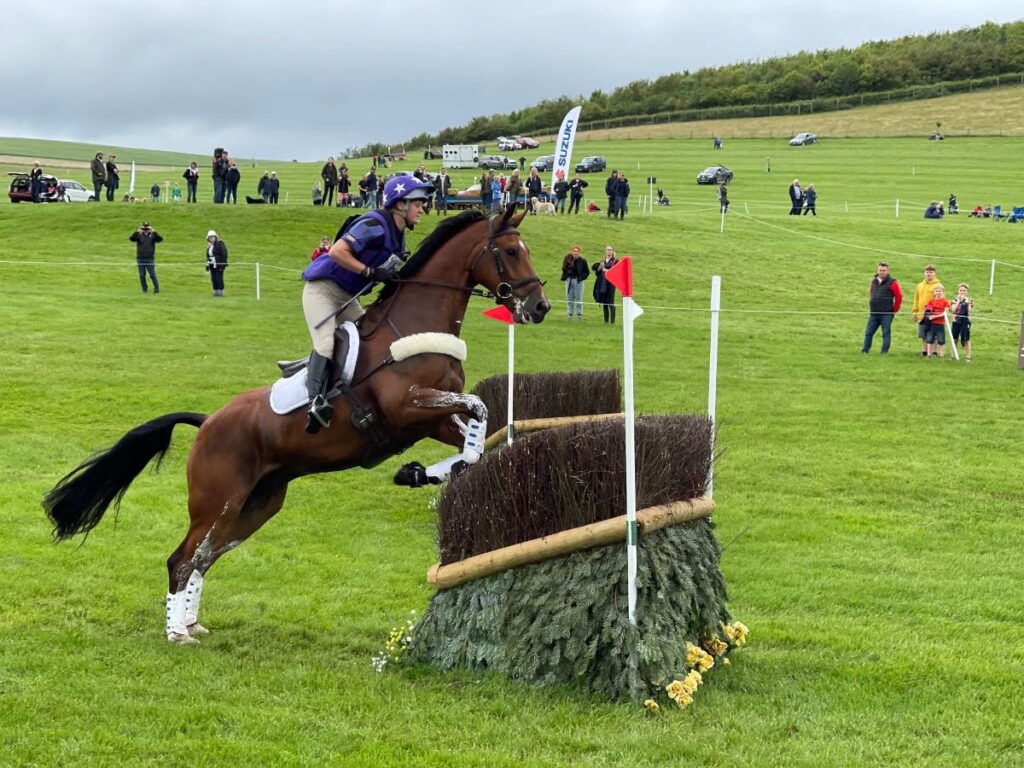
When we visualise, we imagine a situation in specific detail. Perhaps visualising yourself jumping a beautiful clear cross-country round, a fantastic dressage test or a clear show jumping round. However, visualisation can be used for any aspect of our riding. Whether simply mounting in a smooth, balanced, controlled way or riding a constructive, focused schooling session in the arena. Or enjoying a relaxing hack in the sunshine with your horse.
Visualisation and imagery connect directly with our unconscious mind. Which uses the images and ‘videos’ that we feed it to help us embed a more positive, confident and proactive way of experiencing our riding. It also allows us to practice and develop our skills without actually riding. Since our unconscious mind doesn’t know whether our beliefs, thoughts and emotions are real or imagined, we can use it to our advantage!
However, while most riders are really good at imagining all the things that we don’t want to happen. Not many explore the possibilities that become available to us when we train ourselves to visualise exactly what we so desperately want!
The process of visualisation and imagery makes use of all of our senses, i.e. sight, hearing, touch, smell and taste. The more we incorporate these into our mental imagery or film running in our minds. The more powerful the process will be.
How does visualisation help riders?
Visualisation helps you to get the most out of your training and competition experiences. It helps you build on your strengths and identifies areas for improvement. It also helps reduce anxiety and nerves whilst also improving your ability to stay focused, confident and resilient.
There’s evidence that visualisation and mental rehearsal helps athletes continually improve performance in elite sports and the rider’s ability to stay motivated to achieve their goals.
Visualisation is brilliant for maintaining and improving skills when riding is not an option. Even if you’re injured, or your horse is out of work, you can still use visualisation to help you stay on track, to ‘practice’ your riding at home, and to get back on track more easily when you can ride your horse again.
By regularly practising visualisation, riders can reduce their anxiety by allowing themselves to picture and experience what success feels like. It helps riders relax and know that they can cope with whatever happens. It focuses the mind on what positive action can be taken to improve the experience for both horse and rider.
Visualisation also helps the rider to prepare for possible challenging situations. Then to find and implement appropriate solutions whilst also developing automatic muscle responses.
So what’s the process for actually visualising yourself riding?
- Find somewhere quiet to sit, and close your eyes
- Imagine yourself riding your horse in a particular scenario
- Imagine yourself actually riding in real time. As if you are looking out through your own eyes while sitting on your horse. Notice your surroundings; what can you see, hear and feel?
- Create a film in your mind’s eye of the fantastic ride that you want to experience. Remember that your focus is exactly what you want to happen, in its full technicolour magic.
- If you imagine negative experiences or things you don’t want to happen. Simply re-wind your film and re-run it with the new, positive imagery.
Practice makes perfect!
Visualisation is most powerful when the images and films in our minds are vivid and extremely detailed. Make use of all of your senses. It’s a skill; just like when we learn anything new, it can feel strange and even silly. But the more you practice it, the better you get. You may even find that you can visualise what you want to happen in real time when actually riding (with your eyes open, obviously!).
Focus on the quality of your imagery rather than quantity. It can be mentally tiring when you first start. As your mind will drift towards old thought habits. You’ll need to practice shifting your focus from negative to positive.
Make your visualisation as realistic as you can by adding specific details. Such as the competition venue, the banners, the flowers, the judges, or other competitors. If you’re visualising yourself riding at home, you could add in the yard dog trotting across the arena. Other horse owners mucking out or cars coming and going.
When you get good at visualisation, you can use it to help you overcome those circumstances that challenge you. For example, the spooky part of the arena or traffic while out hacking. By imagining those scenarios, you can plan for them and practice how to deal with them positively, confidently and effectively.
Visualisation is such a powerful tool for riders to help them build confidence and trust in themselves and their horse. It can even be applied to other areas of your life too. Try it today, and I’d love to hear how you get on!